History of Present Illness
Louie Cloverfield is a known patient to the ED who presented at 11:00 PM the previous night with a potentially lethal blood alcohol content (BAC) of 0.420. Due to severe chronic alcohol tolerance, he survived the acute intoxication and is currently sobering up. He is now being evaluated for acute alcohol withdrawal.

Emergency Department Course
Morning Rounds / Reassessment
Morning rounds to clear the ED boarder log and evaluate patient for discharge readiness.
+1
Morning Rounds / Reassessment
Morning rounds to clear the ED boarder log and evaluate patient for discharge readiness.
Medical Decision Making
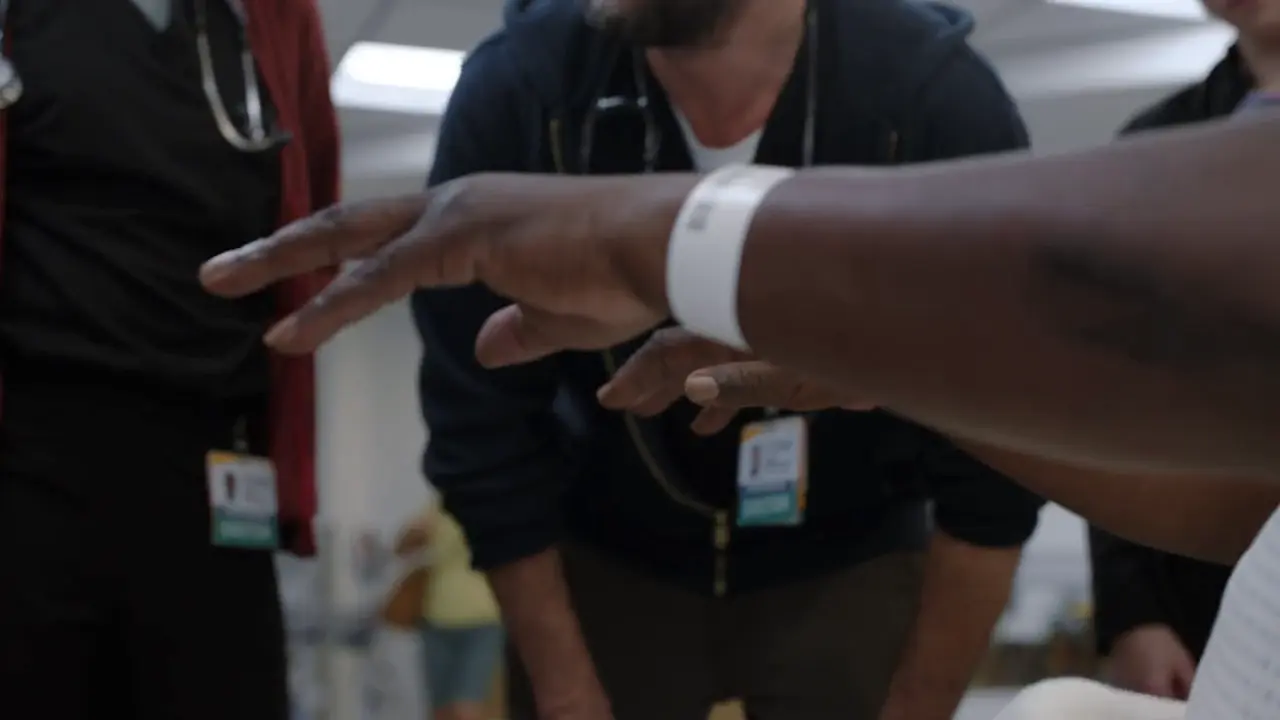
Patient has metabolized a massive amount of alcohol overnight. As his BAC drops, he is at high risk for acute alcohol withdrawal syndrome. The physician requests the patient to hold out his hands to assess for an intention tremor, a hallmark early sign of withdrawal. To prevent progression to seizures or Delirium Tremens (DTs), benzodiazepines are indicated.
Diagnostics & Findings
- Physical Exam (Tremor Check)
Findings:
- Tremor observed upon holding hands out
Interventions
- Lorazepam (Ativan) IV push (previous doses x2)
- Lorazepam (Ativan) additional doses x2
- Prescription for Librium (Chlordiazepoxide) for outpatient taper
⮑ Outcome & Reassessment
Patient is responsive, cooperative, and joking with the physician. Discharged with an outpatient Librium taper.
Clinical Media
Diagnoses & Disposition
Evolving Diagnoses
- [S01E01]Acute Alcohol Intoxication
- [S01E01]Alcohol Withdrawal Syndrome
- [S01E01]Severe Alcohol Use Disorder
Current Disposition
Discharged to home with a Librium prescription.
Casebook Analysis
Episode Context
Louie is a 'frequent flyer' used to establish the chaotic but familiar routine of the ED during morning rounds. He provides a brief moment of levity and demonstrates the staff's familiarity with their regular underserved community population.
Attending's Review
Medical Accuracy
A BAC of 0.420 is indeed lethal for many, but chronic alcoholics can develop profound tolerance and present awake at this level. Assessing for tremor by having the patient hold out their hands is a highly accurate representation of the CIWA-Ar (Clinical Institute Withdrawal Assessment for Alcohol) protocol. Utilizing lorazepam acutely and prescribing Librium (a long-acting benzodiazepine) for outpatient discharge is a clinically appropriate taper strategy.
Complications & Errors
- Discharging a patient with a Librium prescription requires a high degree of trust that the patient will not resume heavy drinking immediately, as mixing alcohol and Librium risks lethal respiratory depression. In a real ED, a patient peaking at 0.420 might require a longer observation period or inpatient detox placement depending on social support.
Clinical Pearls
Chronic alcohol tolerance can shift the lethal threshold of BAC significantly; always treat the clinical picture (GCS, airway protection) rather than just the number.
Tremor, diaphoresis, and tachycardia are early sympathetic signs of alcohol withdrawal. Prompt treatment with GABA-agonists (like benzodiazepines) is required to prevent seizures.
Librium (Chlordiazepoxide) has a very long half-life, providing a 'built-in taper' that makes it ideal for outpatient management of mild-to-moderate alcohol withdrawal.