History of Present Illness
79-year-old male from an assisted living facility presenting to the ED with a fever and cough. He has a history of mild Alzheimer's disease. On arrival, he is tachycardic, hypotensive, and experiencing altered mental status (asking if it is dinnertime). A POLST form from his facility indicates he is to receive IV fluids and medications, but no intubation and no chest compressions (DNI/No CPR).

Emergency Department Course
Initial Evaluation & Intervention
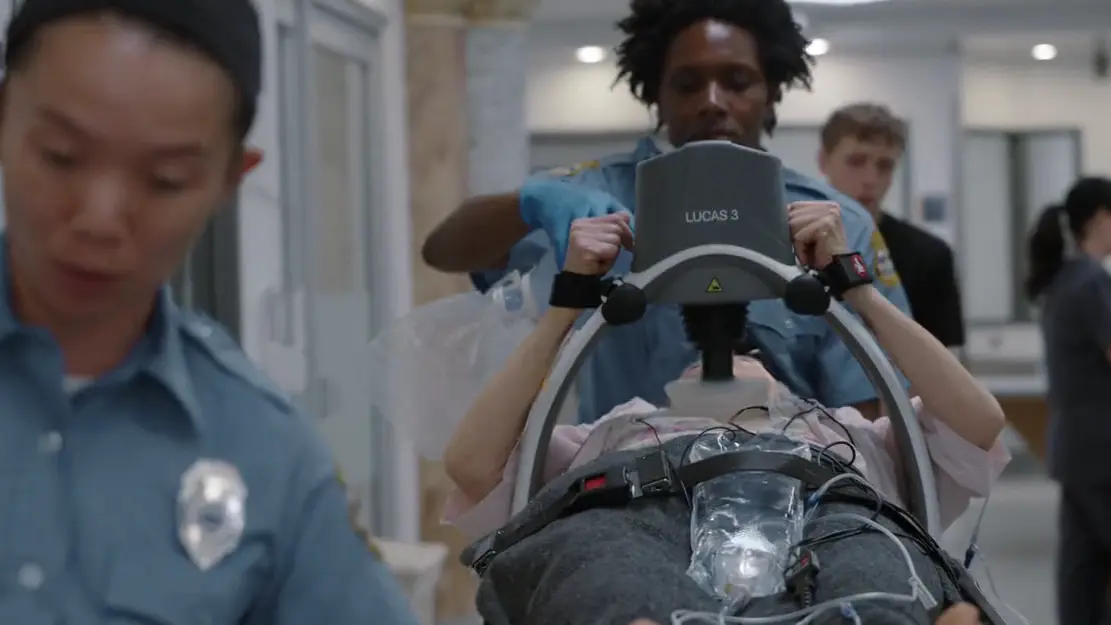
Patient arrival from an assisted living facility demonstrating signs of systemic inflammatory response syndrome (SIRS) and hypoperfusion.
Initial Evaluation & Intervention
Patient arrival from an assisted living facility demonstrating signs of systemic inflammatory response syndrome (SIRS) and hypoperfusion.
Medical Decision Making
The patient is an elderly male with fever, cough, tachycardia, and hypotension. Lung auscultation reveals coarse rhonchi, and imaging shows a right middle lobe infiltrate. This constellation of signs clearly indicates sepsis secondary to pneumonia. A 'Code Sepsis' is initiated to ensure rapid compliance with CMS guidelines (SEP-1 core measure bundle), which requires measuring a lactate level, obtaining blood cultures prior to administering broad-spectrum antibiotics, and administering a 30 cc/kg crystalloid fluid bolus for hypotension.
Diagnostics & Findings
- Lung auscultation
- Chest X-ray (revealing RML infiltrate)
- Two sets of blood cultures ordered
- Lactic acid ordered
Findings:
- Coarse rhonchi on auscultation
- Right middle lobe infiltrate
- Fever of 102.0 F
- Altered mental status/Confusion
Interventions
- Review of POLST (DNI/No CPR confirmed)
- Initial 500 cc normal saline bolus
- 30 cc/kg normal saline ordered
- Ceftriaxone 1g IV ordered
- Azithromycin 500mg IV ordered
⮑ Outcome & Reassessment
Patient remains confused but compliant. Treatment protocol initiated pending lab results and response to fluid resuscitation.
Diagnoses & Disposition
Evolving Diagnoses
- [S01E01]Right Middle Lobe Pneumonia
- [S01E01]Sepsis
Current Disposition
Admitted/Undergoing Sepsis Protocol Treatment in the ED
Casebook Analysis
Episode Context
The case showcases the ED's morning rush of elderly patients arriving from nursing homes and assisted living facilities. It highlights the systematic nature of handling critical infections ('Code Sepsis') and sheds light on the bureaucratic pressure hospitals face regarding federal audits on sepsis bundle performance metrics.
Attending's Review
Medical Accuracy
The depiction of the 'Code Sepsis' protocol is highly accurate to modern emergency medicine standards. Drawing blood cultures before administering antibiotics, checking a lactic acid level, ordering 30 cc/kg of crystalloid for hypotension, and using Ceftriaxone plus Azithromycin to cover community-acquired or healthcare-associated pneumonia are all textbook, standard-of-care steps in the CMS SEP-1 core measure.
Clinical Pearls
Always check POLST/advanced directives early for patients arriving from assisted living or nursing homes before initiating invasive, life-sustaining procedures.
The 3-hour sepsis bundle requires lactate measurement, blood cultures prior to antibiotics, broad-spectrum antibiotics, and a 30 mL/kg crystalloid bolus for hypotension or a lactate >= 4 mmol/L.
Elderly patients with pneumonia often present with atypical symptoms, such as altered mental status or lethargy, which may be more prominent than the classic respiratory symptoms like cough.